Over the past decade or so, thematic investing has risen from obscurity and made its way into many portfolios. Evidently, a theme may generate beneficial investment opportunities. The trick is recognizing the trend early and identifying correct investment opportunities which can lead to significant market out-performance. After all, most investment strategies, even the most secretive and complicated, often boil down to two types: following a new trend or anticipating a break in the existing one.
A staple in traditional institutional portfolios for alpha generation, it used to require dedicated research teams and active management. But thematic investing is prohibitively expensive for individual investors no more. For over a decade, Eureka Wealth Solutions has been pioneering a revolutionary approach to thematic investing and democratizing access to it for an everyday investor.
But first, let’s define thematic investing and clarify some big misconceptions.

What is Thematic Investing?
A theme is a trend, due to any of the following factors:
- Economic
- Social
- Demographic
- Geopolitical
- Regulatory and legislative
- Geographical
- Technological
Examples
The list below is meant to give you a better understanding and a little taste of the opportunities that thematic investing offers. We maintain over 400 distinct thematic portfolios, and more are built continuously.
Technological Trends
- Artificial Intelligence
- Cybersecurity
- eCommerce
- Mobile Computing
- Cloud Computing
- Robotics & Automation
- Internet of Things
- Fintech and Payments Technology
- Blockchain
- Ad-Tech
- Drones
- Flying Cars
- Space Exploration
- Genomics
- Immunotherapy
- Molecular Diagnostics
Geopolitical and Economic
- Major world conflicts and disruptions
- Rise of China and the BRICs
- Global trade and supply chains
- Population growth and demand for food and water
- Future Infrastructure
- Change in energy usage and storage
- Smart Cities
- Information and data flow
- Inflation
- Falling Rates
Social
- Fitness
- Organic and other Food trends
- Pets
- Cannabis
- Travel and Entertainment
- Empowerment of Women
- Ed-Tech
- Gig Economy
- Sharing Economy
- Gun Violence, Safety & Security
- Social Justice
Demographic
- Retirement of baby boomers
- Millennial Generation Rising
- Millennial Generation Rising
- Hispanic and other immigrant population growth
- Population mobility
Regulatory / Legislative
- Financial regulation post-crisis of 2008
- Tax legislation
- Subsidies, tariffs, government spending
- Healthcare regulation
- Infrastructure legislation
Keys to Success
These rules can help design a winning thematic strategy:
 Must have an investment thesis
 Well-defined trend with growth objectives and timelines
 Identify theme beneficiaries
 Identify “pure plays”
 Get in early
Types of Themes
| Theme Type | Description | Example Portfolios |
|---|---|---|
| INNOVATION | Innovation, typically in technology, healthcare or industrial sectors, such as artificial intelligence, drones, immunotherapy, electric vehicles, etc. | Energy Storage, Blockchain, Learning to Fly, Internet of Things, “I, Robot” |
| ECONOMIC | Economic and market drivers, such as inflation, rising rates, etc. | Rising Rates, Gig Economy, Supply Chain, Sideways, Rent |
| BUSINESS MODEL | Specific business model such as government contracts or subscriptions | House of Cards, “Please Subscribe”, Energy YieldCo, Transformers, Deal or No Deal |
| GEOGRAPHICAL | Companies concentrated in a city, state, region or part of the world | Garden State, African Natural Resources, South Pacific |
| SOCIAL | Social trends, such as organic food, fitness, etc. | Pump Up the Iron, Draft Day, On the Road Again, Smart Home, Fighting Climate Change |
| DEMOGRAPHICS | Companies focusing on businesses favored by demographic groups or trends | Millennials, LGBTQ, Forever Young, Minority Report |
| EVENTS | Public and geopolitical themes as well as seasonal trends | Legends of the Fall, Brave New World |
| INDUSTRY | Niche emerging industries | Specialized REITs, Tanker, Neural Medicine, Trainspotting |
| INCOME | Models designed to create income streams | Monthly Income, Chasing Yield, Even Flow, Royalty Trusts |
| HEDGE | Models designed to hedge specific risks | COVID-19 Protection, Custom-Hedged World, Sum of All Fears, Forces of Nature |
| SMART BETA | Factor-based models | Best of Breed, Smart Beta – Earnings, Mid-Cap Oil & Gas Producers, Big Pharma |
| SCREEN | Rules-based portfolios screening for a series of fundamental and/or technical indicators | Rules-based portfolios screening for a series of fundamental and/or technical indicators |
| ACTIVE MANAGEMENT | Proprietary research ideas or collection of actively managed ETFs | The Wallflowers, Lost in Translation, Passed Pawns |
Advantages vs. ETFs
As the thematic investing trend (pun intended) has picked up in recent years, so has the number of ETFs trying to take advantage of the opportunities. While ETFs can often offer a suitable solution to investors, they leave a lot to be desired in case of thematics.
- Construction methodology: One of the biggest issues with portfolio construction is not identifying the beneficiaries but assigning portfolio weights. The most common strategy is to use companies’ market capitalization, but then you often end up with ETFs that are heavy on the tech megacaps that are dipping into many technological trends, and those thematic portfolios start resembling many other tech index funds with high correlation to them.
- Liquidity and Lack of pure play: To expand on the previous point, ETFs are businesses that are trying to scale to achieve profitability. That requires building up the total AUM in their fund, as well as providing adequate daily liquidity for investors to enter and exit positions. New themes often have very few so-called “pure plays” that derive nearly all their revenue from a given theme. Including those into ETF with significant weights could cause significant market dislocations for small companies with low daily trading volume. So, ETFs have to make a business decision: taper growth or compromise on the portfolio integrity.
- Active vs. Passive Management: Most themes, especially new ones, require frequent portfolio updates. IPOs, mergers and acquisitions, and corporate restructuring or strategy changes require additions, subtractions, and weight changes in a thematic portfolio. An ETF following an index will likely be too slow to react to these changes. Actively managed ETFs have been gaining steam in recent years because of it, but they also lack transparency to investors and rely solely on the manager’s methodology and discretion.
- Cost: While many popular and highly liquid ETFs have been cutting expense ratios to near-zero to ward off competition, the thematic funds have to carry a significant fee to offset operational costs of dealing with lower AUM and challenging liquidity operations. These fees, commonly between 0.50% and 1.00% annually, often rival those of mutual funds. Actively managed funds are even more expensive.
- Short-term or seasonal trends: Many themes Eureka tracks are relatively short-term such as geopolitical developments or regulatory trends, and many have a defined lifespan such as elections, significant legislation, natural disasters, rising and falling interest rates, inflation, and others. There are also a number of seasonal trends such as Holidays Season’s shopping, summer travel, back-to-school trends, January effect, etc. Typically, ETFs are not suitable for these types of themes. Additionally, when a new trend is identified, it takes at least several months for an ETF to be ready for investors due to the regulatory process of creating and approving an exchange-traded product. That type of delay could miss the opportunity, especially if it was short-term in nature.
Our Approach to Portfolio Construction
- Theme identification: We’re often asked how we came up with a certain theme. Current events often produce structural changes that create opportunities. Crises such as the Great Financial Recession, COVID, Russia-Ukraine War each created a myriad of potentially profitable themes. Innovation is accelerating and often produces unexpected winners. Thorough analysis and research to identify a theme and define its scope, and to build a portfolio around it is what Eureka does. When investors start paying attention, private companies in a hot theme try to go public, and fund managers try to capitalize on the new investor demand. IPOs and new ETF launches are solid confirmations of a theme but often miss early opportunities.
- Individual thematic portfolio construction: Each theme requires somewhat unique approach. While the identification process is the same, portfolio construction requires decisions on inclusion and weights. As mentioned before, the emphasis is on identifying pure plays – investments that are most closely aligned to the theme. The weighting scheme would then use factors such as percentage of revenue or R&D spending within the theme, economic moat, as well as market cap and liquidity. When some of this information is unavailable or rapidly changing, portfolio manager’s discretion is used to refine the portfolio weights. A thematic portfolio is retired when the investment thesis no longer applies. Thematic allocation will also be removed or replaced when the portfolio requirements change, and it no longer meets the account’s risk profile and time horizon of the overall portfolio.
Portfolio usage: As with other investments, there are three main reasons to use thematic portfolios:
Typically, thematics are used as satellite or tactical allocations, to represent a relatively small size of overall portfolio. One of the benefits of thematics is the ability to provide unique solutions for these objectives where the larger, strategic allocations cannot. There are a number of ways we can use our thematic portfolios in the overall portfolio:
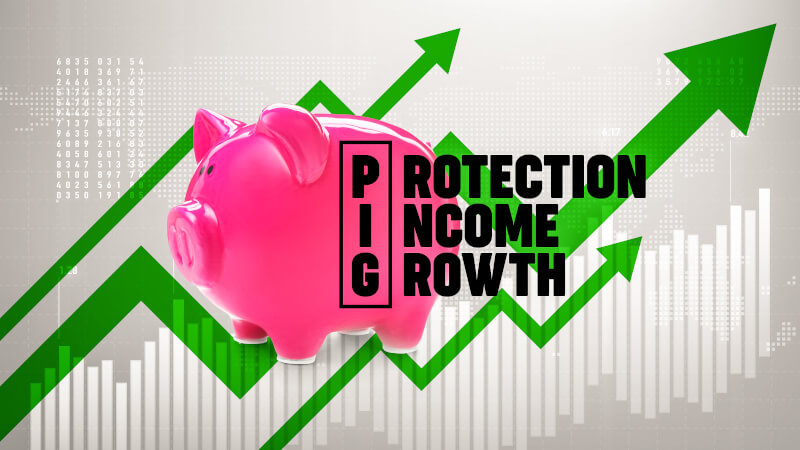
- Alpha generation – typically growth portfolios expected to outperform their mid-to-long-term benchmarks
- Opportunistic – typically a short-term high risk / high reward theme for the aggressive portfolios
- Income generation – for the appropriate requirements of a client’s level of risk tolerance
- Protection – a hedge for specific other investments or the rest of the portfolio Diversification – from the rest of overall portfolio
- Personalization – the theme that reflects investor’s values and passions
- Specialization – the niche that provides better alpha generation and/or personalization
- Combination of some of the above
- Rebalancing: Thematic portfolios require relatively frequent rebalancing, much more so than most managed portfolios. Depending on the type of the theme and its usage, rebalancing may happen as often as necessary based on significant changes in the theme or corporate actions. Every funded thematic portfolio is formally reviewed at least quarterly. After a rebalance of the underlying thematic portfolio occurs, the changes are usually carried over to the client portfolios. The exception may be a specific tax situation that impacts a given client, which would be handled on a case-by-case basis.

Case Study: Supply Chain
Investment Thesis: As the supply chain issues persist globally, many market participants are innovating to persevere. Includes logistics, shipping, distribution, leasing, outsourcing, warehousing, equipment, technology, and more.
Trend and Timeline: Reshaping of supply chains is expected to play out for the next 1-3 years.
Primary Beneficiaries
- Integrated Logistics
- Trucking / Freight
- Marine Container Shipping
- Transportation / Storage Leasing
- Warehousing (REITs)
- Industrial Outsourcing
- Software – Supply Chain
- Industrial Distribution
Secondary Beneficiaries
- Industrial Packaging
- Industrials – Efficiency & Automation
- Industrials – Heavy Equipment
- Semiconductors – Testing, Equipment, Wireless
- Telematics / Remote Asset Management
- Large Retail
- Software – Enterprise Resource Planning (ERP)
